Understanding Countertop Composting
Composting is the managed decomposition of organic materials such as food scraps, paper waste, and yard trimmings. It is an effective way to reduce the amount of food waste that ends up in landfills. Traditionally, home composting was something you could only do outside by digging a hole or using an outdoor compost bin. However, there are now methods that allow for composting from the comfort of your home.
When it comes to countertop composting, you can either store your food scraps in a countertop compost bin or use an electric countertop composter. While you could use your countertop solutions as short-term storage before bringing your scraps to an outdoor compost pile, you don’t need any outdoor space at all. You can bring your food waste to a local farmers market, give it to a friend who composts, or your community might even offer curbside compost pickup.
Experts in the Good Housekeeping Institute Kitchen Appliances and Innovation Lab evaluated countertop composters in their own kitchens and in the Lab. They also relied on their knowledge of sustainability and product design to select bins and electric composters that consumers will want to store on their countertops (think: less odor, compact, and relatively quiet).
Top Countertop Compost Bins
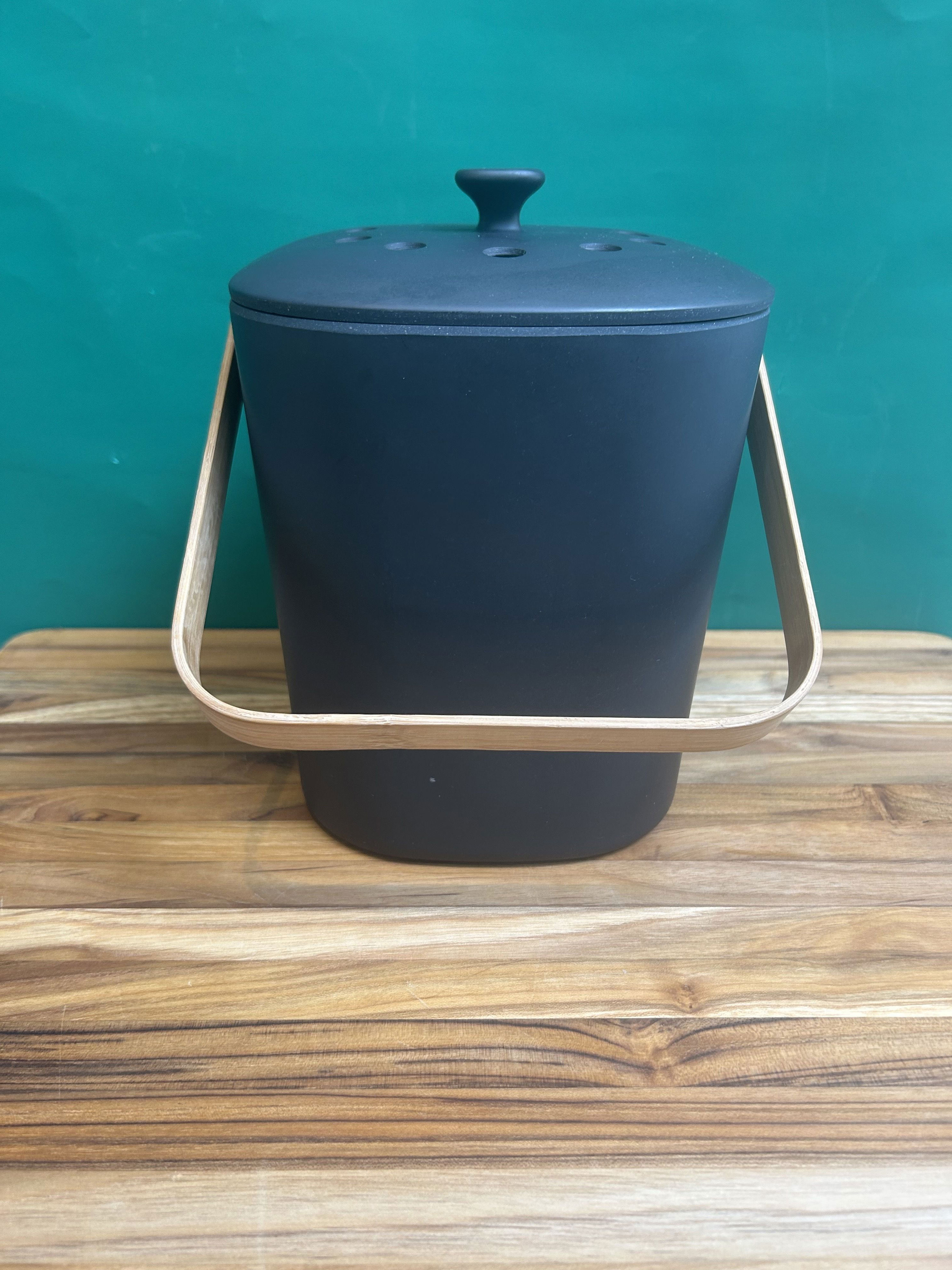
Bamboozle Countertop Compost Bin
- Type: Compost bin
- Dimensions: 8" x 6.25" x 9"
- Capacity: 3.6 liters
- Weight: 2.4 pounds
The Bamboozle countertop compost bin is a great choice for beginners, apartment dwellers, and avid composters alike because of its stylish design and useful features. Testers liked the bamboo handle for carrying to a large compost pile or to empty into a municipal compost bin, and the rich colorways—although note that many are currently out of stock. Store scraps temporarily in this chic container that has both a secure, vented lid (allowing for airflow) and a replaceable hemp filter. According to the manufacturer, the filters are dishwasher safe, compostable, and can be used for up to two months each.
HOW IT PERFORMED IN OUR TESTS:
Our experts found that this model was easy to clean after emptying and can even be thrown in the dishwasher. Though we like that this bin is compact, it does mean you'll need to empty it frequently if you have collected a lot of compostable waste.
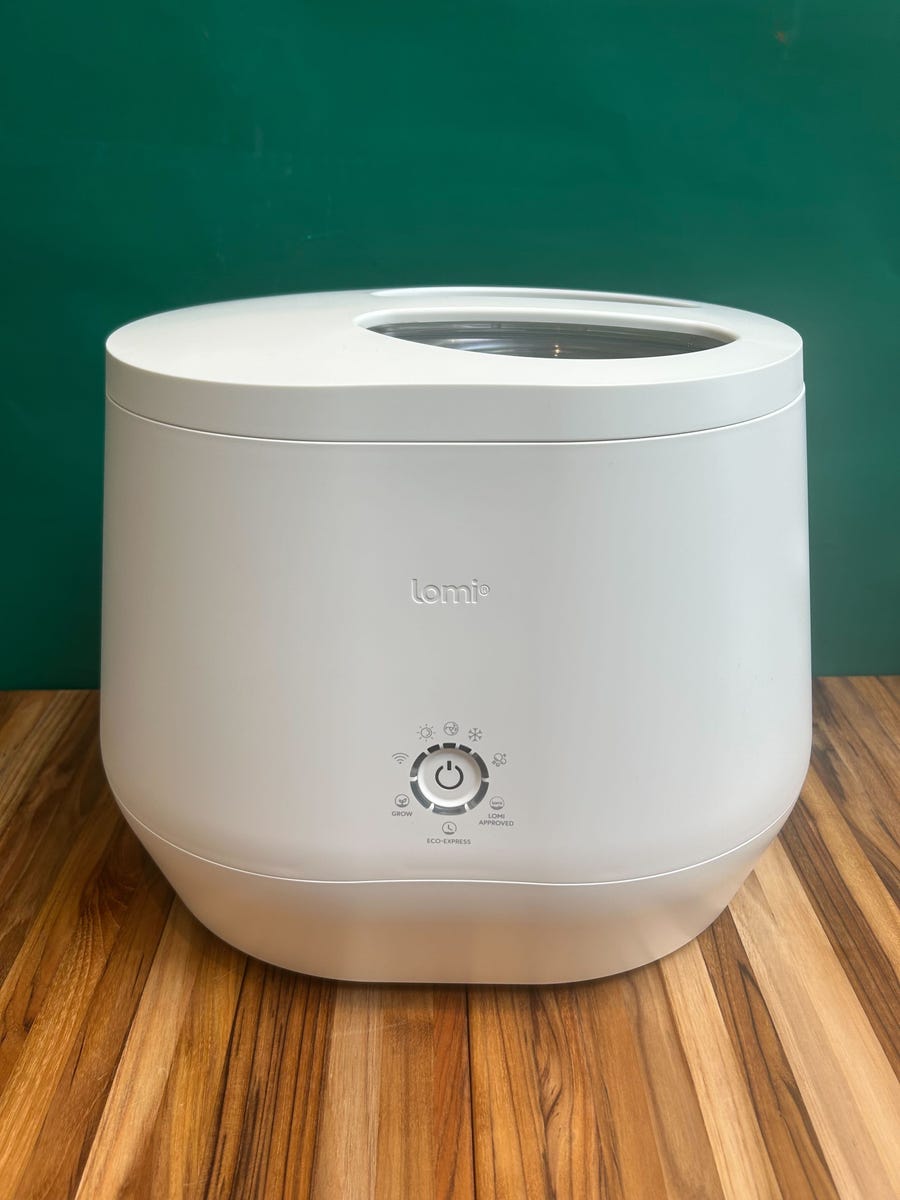
Lomi 3 - Smart Waste System
- Type: Electric composter
- Dimensions: 16" x 13" x 12"
- Capacity: 3 liters
- Weight: 19.8 pounds
Composting outdoors can be done in the winter, but it requires more effort to ensure the pile remains warm, and of course, you have to spend additional time outside tending to it. Our solution? The Lomi 3 Smart Waste System is a countertop electric option that lets you compost year-round from the comfort of your kitchen countertop.
The Lomi 3 has a 36% smaller footprint than the Lomi 2, which had wider dimensions that we weren't a big fan of for a countertop composter. It also works well for those who live in apartments, thanks to its sleek, decor-friendly design.
This compost bin stirs the contents of the inner bucket and uses both drying heat and microbial tablets to break down the waste. It includes enough microbial tablets—as well as activated charcoal for the top and bottom built-in filters—for around three months; you'll then have to purchase replacement tablets and charcoal.
HOW IT PERFORMED IN OUR TESTS:
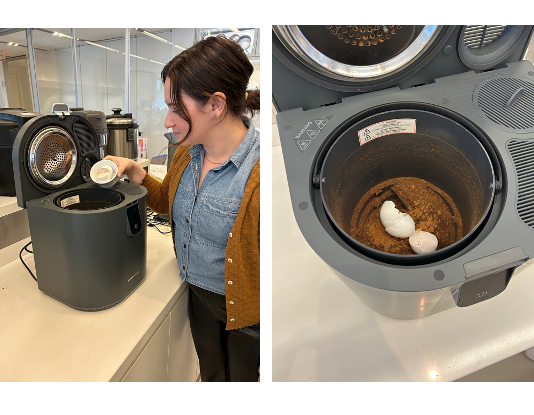
We just started testing this exact model, but we have tested the since-discontinued Lomi 2. We found that the previous model had a quiet run time and that its filter controlled odors well. The dried and cooled compost it produced was easy to dispose of as well.
This upgraded model has a smaller size, an easier-to-use interface, an even quieter noise level, and a cleaning mode, so you don't need to clean the composter manually. The Lomi 3 also has the Lomi app, which helps you track your impact, earn rewards, and monitor your filter, but we've experienced a bit of a learning curve with the app and connecting it to the composter.
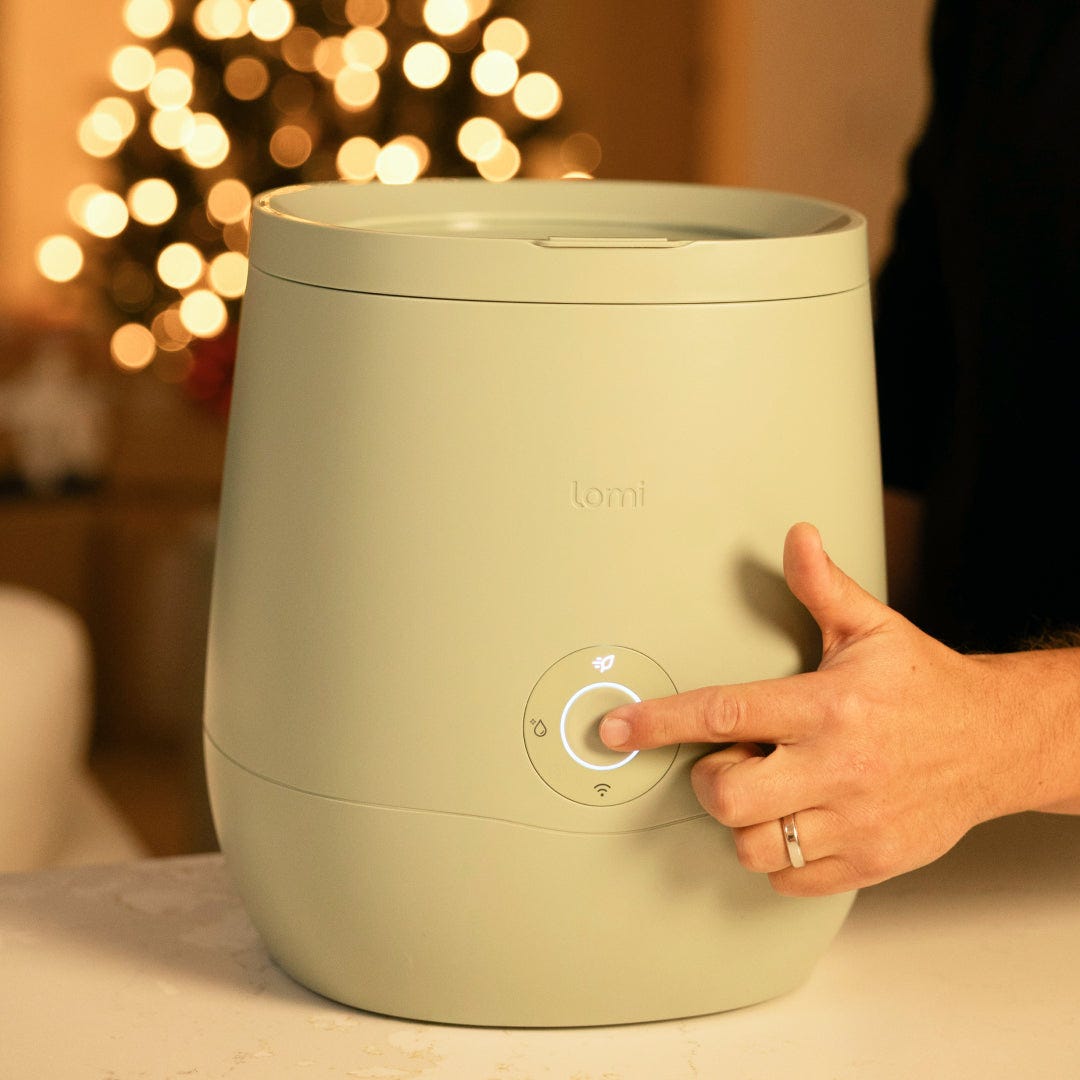
This is the Lomi 2 that we tested. It's currently out of stock at all retailers.
Additional Compost Bins
Good Grips Easy-Clean Compost Bin
- Type: Compost bin
- Dimensions: 6.6" x 6.4" x 7.5"
- Capacity: 2.8 liters
- Weight: 1.2 pounds
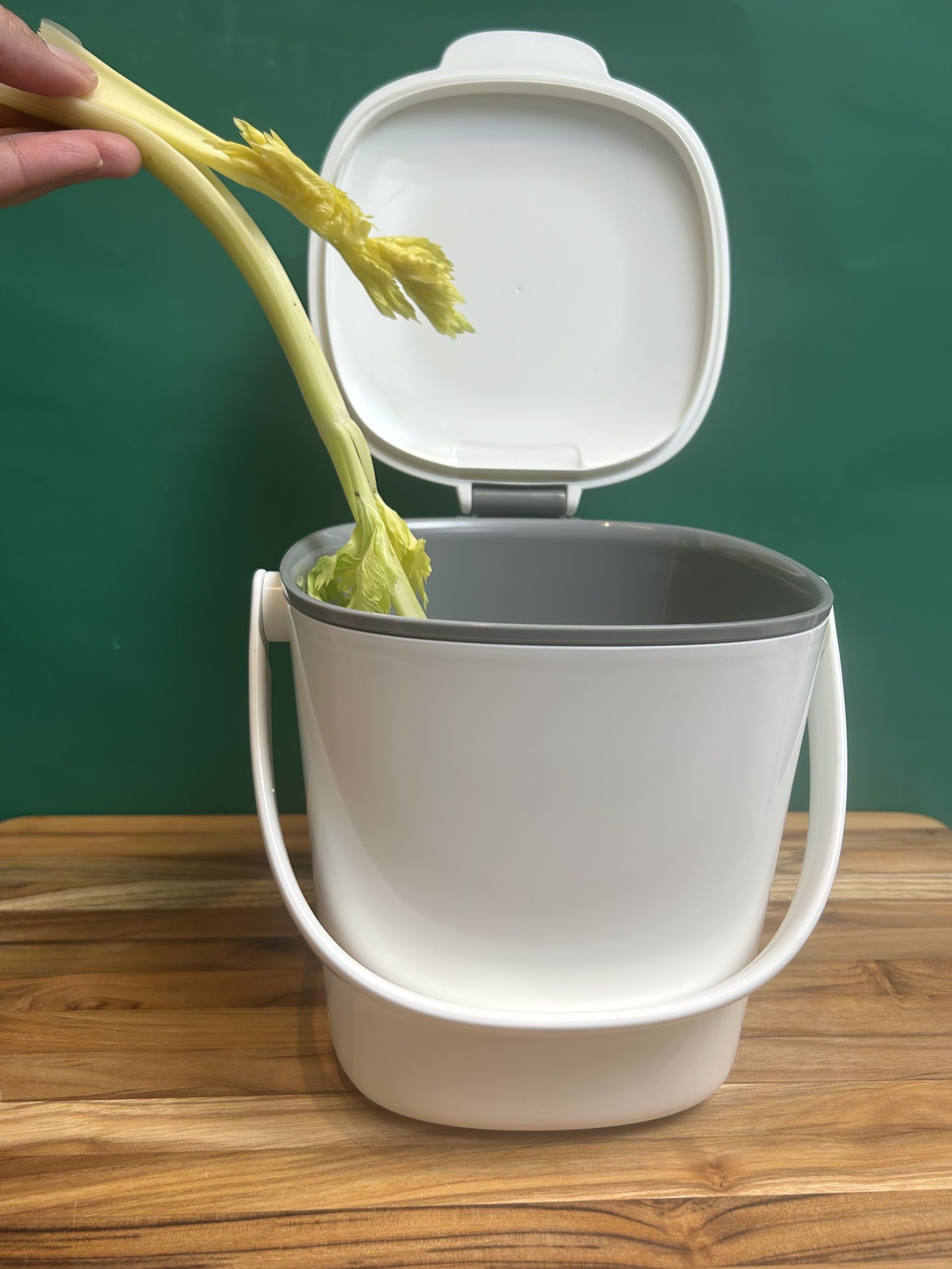
The compact footprint of this affordable OXO compost bin makes it unobtrusive for under-sink or freezer storage, and the clean, simple design means it's also suited to countertop use. It works with compost bags, but our Lab pros like that the smooth interior and removable lid ensure that the bin is easy to clean when you don't use bags. You can also run the bucket through the dishwasher if it gets too dirty.
HOW IT PERFORMED IN OUR TESTS:
The handle makes this compost bin easy to carry to your yard or a drop-off center. The lid helps reduce odors in your kitchen and is removable for easy emptying, but we did note that it doesn't seal, is not soft-close, and can be a bit loud when it shuts. Keep in mind, you also have to empty this bin often since it doesn't have a filter or sealing lid to mitigate odors.
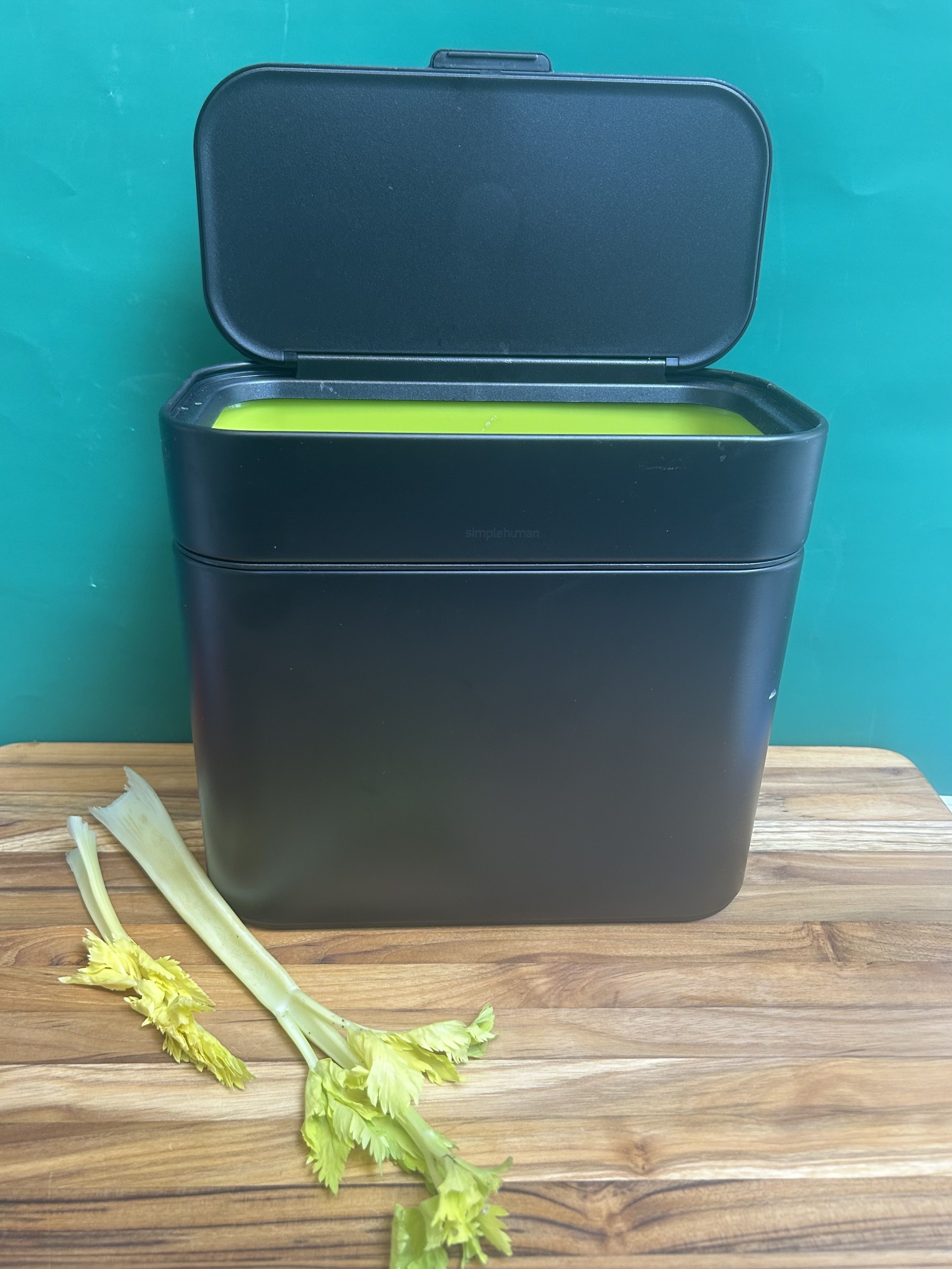
Compost Caddy
- Type: Compost bin
- Dimensions: 9.6" x 5.7" x 8.5"
- Capacity: 4 liters
- Weight: 3 pounds
Simplehuman trash cans have earned praise from our Cleaning Lab experts, and now our kitchen pros recommend the brand's compost caddy as well. The large collar on the lid helps secure and conceal compost bags for the removable inner bin. Many compost bags will work, but for the best fit, the company recommends its custom-fit compost bags.
Our favorite feature? It comes with a magnetic mount that lets you attach the compact caddy to Simplehuman trash cans so that it's stored out of the way and accessible for quick use. Because this composter is attached to the trash can, Director of the Kitchen Lab Nicole Papantoniou found that it streamlined the step of tossing waste into the caddy. One downside is that the mount is not universal and will not work for all trash cans.
HOW IT PERFORMED IN OUR TESTS:
Many members of our team have tested this pick in their homes. Our pros liked that the bin is very narrow, so you can detach it from its trash can mount and use it on your kitchen counter when you're prepping food or cleaning up after a meal—it doesn't take up much space. Keep in mind that there isn't any filter in this bin to mitigate odors, and it might get smelly if you leave food scraps in it too long, so be sure to empty it at least daily.
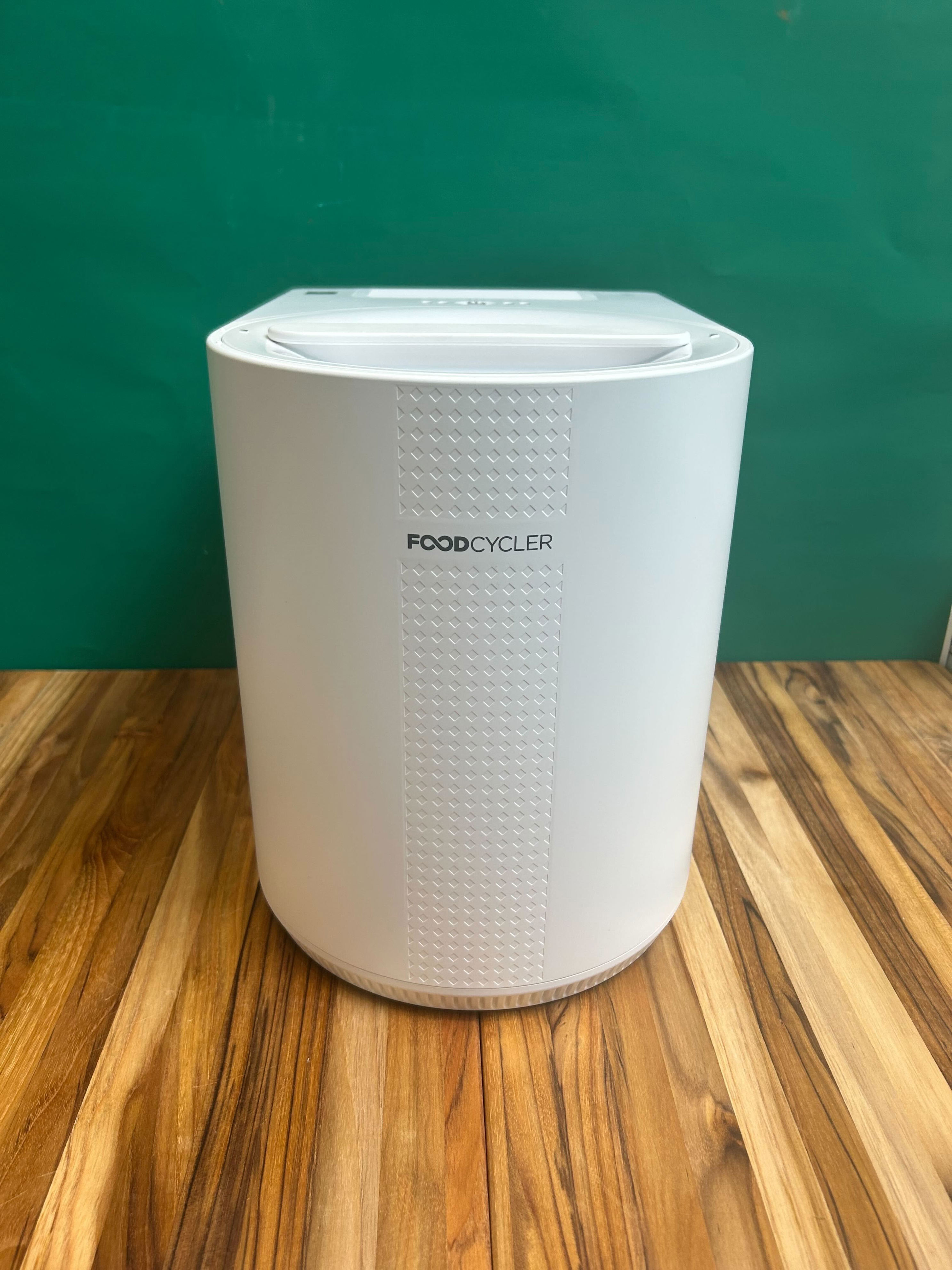
Eco 3
- Type: Electric composter
- Dimensions: 13" x 9" x 11"
- Capacity: 3.5 liters
- Weight: 28.2 pounds
Some electric composters can fit on your countertop, but they take up quite a bit of space. This new model from FoodCycler is the most compact we've tested. "It has a small footprint, but I find I can fit a fair amount of scrap in it," said one analyst, who has been testing this model in her home for the last six months. "That said, I do live alone, so it might not be as well-suited to those cooking for a large family."
The FoodCycler Eco 3 operates similarly to other FoodCycler models by drying, cooling, and grinding food waste. And the grinding system is so powerful that it can handle pits, peels, and bones. and leftovers, many of which aren't traditionally composted. It also features an intuitive one-touch button for operation and an easy-to-read LED interface.
HOW IT PERFORMED IN OUR TESTS:
Our analyst found this composter reduced the amount of fruit flies and food odors (thanks to the refillable carbon filter) in her kitchen. While she kept it on her floor during testing because of space constraints, she found it to fit nicely on a countertop as well. It was easy to empty because the interior removable bucket has a handle, but it was a bit fussy to click the bucket back in place. Also, keep in mind that the compost cycle is relatively long and can make a squeaky noise during operation.
How We Test the Best Countertop Composters
To find the best countertop compost bins and electric composters, our pros in the Good Housekeeping Institute Kitchen Appliances Lab reviewed the capacity, material, and type of filter for each model. We considered any data on the run time and noise level of each, and whether the device includes a removable inner bucket. We also read the specifications and consumer reviews for the top products on the market.
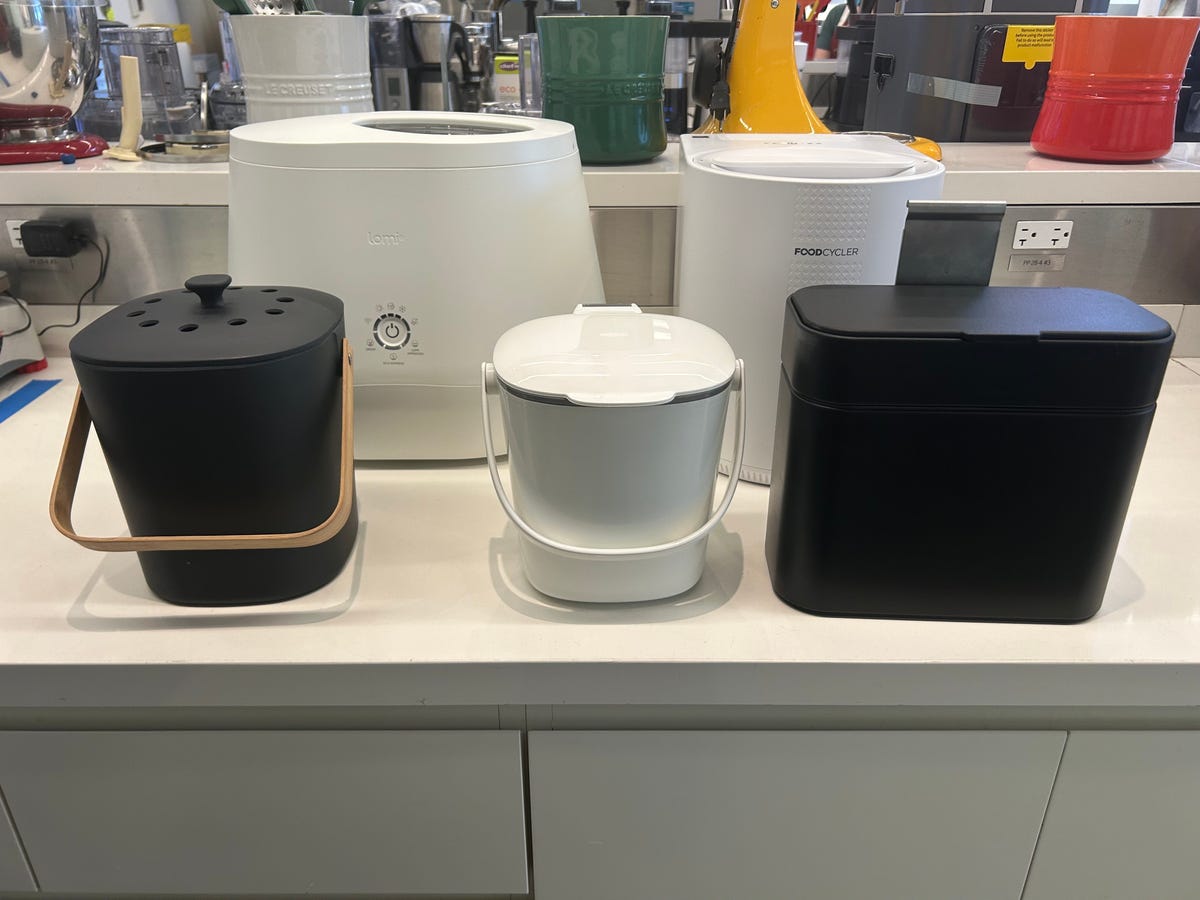
Our pros used the models at home to best approximate the frequency and variety of home use.
We also tested models in our Lab, as we have a lot of food scraps after a day of testing. We focused on food scraps and household waste, rather than yard trimmings. We also sent some models to at-home consumer testers and provided them with a feedback survey.
What to Look for When Shopping for the Best Countertop Composter
- Type: Indoor countertop composting options are available in two main types, the non-electric compost bin or the electric composter.
- Compost bin: These are usually lightweight, affordable and pretty compact. They are only designed for short-term food waste storage though, and should be emptied out in a compost pile.
- Electric composter: These indoor appliances will dry and grind your food scraps, mitigating odors and pests, with no outdoor compost pile required. They're more expensive and larger than compost bins, but quite similar in size to an air fryer or toaster oven.
- Size: Countertop composters can vary in size. If you, in fact, want it to stay on your countertop, we recommend measuring your space and picking a model that would fit best. We've provided dimensions for each of our picks to make this process even easier.
- Seal: Compost bins with tight-fitting lids will help contain odors, which is essential for indoor bins. A tight seal will also deter any rodents or pests that are curious about the bin, even when the scent is minimized. But you do want a bin that opens with ease.
- Filters: Some indoor models rely solely on a sealed lid to prevent odors, but many include a filter. Look for removable filters that can either be washed or replaced. It's a bonus if your version includes replacement filters with the purchase of the bin.
- Special features: Compost bins have fewer special features than electric composters. When it comes to electric composters, some have app capabilities, clean cycles, and interfaces that allow you to track your system's composting progress.

Why Trust Good Housekeeping?
Sarah Gregory is a deputy editor at the Good Housekeeping Institute. She holds a certificate of culinary arts from the International Culinary Center and has been cooking professionally and testing kitchen gear since 2016. She composts at home and has used several of the bins on this list.
Eva Bleyer is the reviews analyst in the Kitchen Appliance and Innovation Lab. She has tested all kinds of kitchen gear for GH, including gas ranges, microwaves, and blenders. She holds a B.S. in Food Studies, Nutrition, and Public Health from New York University, where she studied sustainability practices. Eva has tested a few different electric and non-electric compost bins in her home and in the Lab, and grew up in a household that composted regularly.
Nicole Papantoniou is the director of the Kitchen Appliance and Innovation Lab. She has worked in kitchen product development since 2014, and she oversees all testing related to cooking appliances and tools. She tested many of the bins on our list in her own home.
