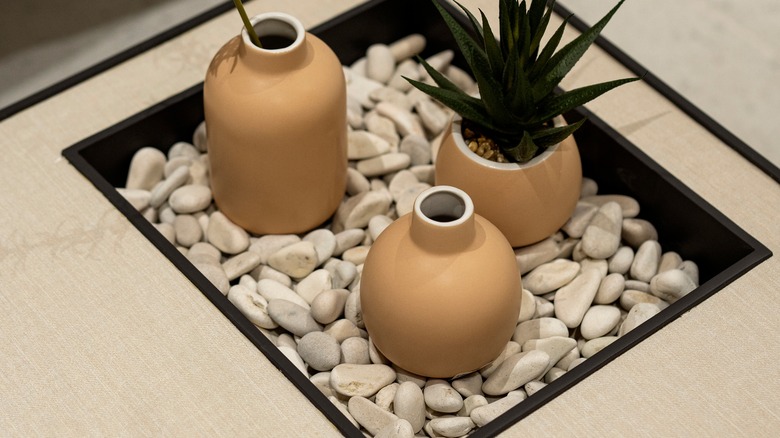
Caring for plants that thrive in humid environments can seem daunting, but with the right tools and techniques, they can be just as easy to maintain as drought-resistant cacti and succulents. While some suggest placing humidity-loving houseplants in unusual spots like bathrooms or laundry rooms, this is actually sound advice. Many moisture-loving indoor plants are well-suited for these spaces. However, people often choose plants based on how they fit into a specific room's aesthetic, such as an entryway or living area. Growing tropical leafy plants like monstera, peace lilies, and ferns, epiphytes like orchids or air plants, or even carnivorous plants like Venus flytraps on a pebble tray is a great option.
A pebble tray is exactly what it sounds like: a shallow tray filled with pebbles. Water is poured over the pebbles, which then evaporates, adding moisture to the air. The planters, or sometimes the plants themselves, are placed directly on top of the pebble tray so they are close to the moisture. This method works particularly well for humidity-loving houseplants that don't like their roots to be constantly soggy. To enhance the effectiveness of a pebble tray, you can pair it with a glass bell jar that traps the humidity around the plant. This creates a localized effect and won't increase overall indoor humidity. You may still need to mist your plants occasionally, depending on the variety.
Air Plants
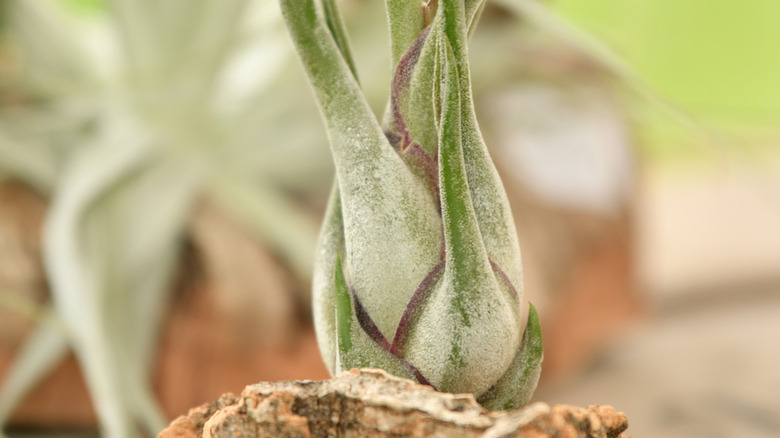
Air plants (Tillandsia spp.) grow without soil and obtain nutrients from the air, making them ideal for pebble trays. They tend to thrive in environments with high humidity levels, which can be challenging indoors. These plants do best when indoor humidity is between 50% and 70%. They also prefer warm temperatures, ideally between 70°F and 85°F. Using a humidity monitor can help ensure the conditions in your home are suitable for air plants on pebble trays.
Alocasias
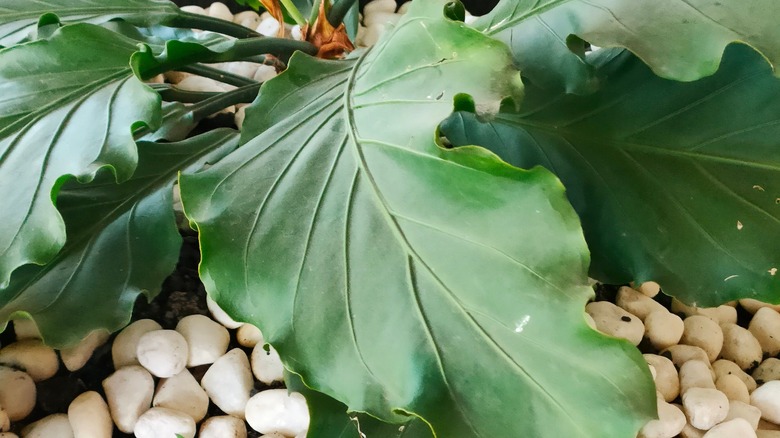
Alocasias (Alocasia spp.) are known for their striking arrow-shaped leaves and bold veining. These tropical plants flourish in consistently moist and warm natural habitats. When growing an alocasia indoors, aim for humidity levels between 60% and 80%. If humidity is too low, the plant will show signs such as crispy brown edges or curled leaves, and stems may drop. Alocasias are prone to root rot, so while pebble trays are helpful, make sure the plant’s roots sit above the water, not in it.
Bamboo
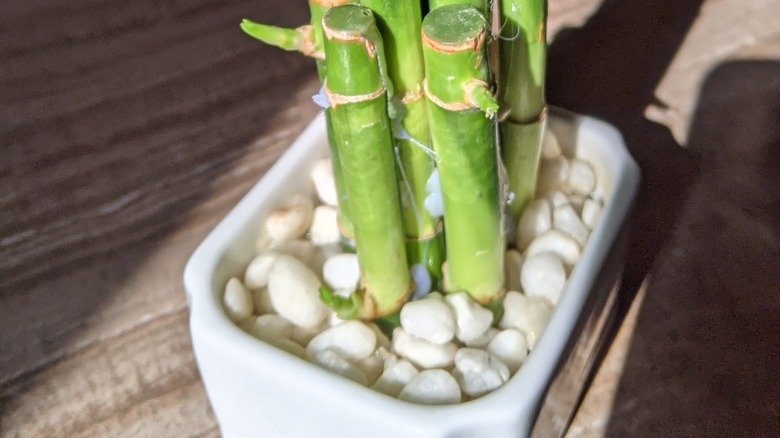
When most people think of bamboo (Bambusa spp.), they imagine tall, straight stalks that pandas eat. Indoor bamboo varieties also require surprisingly high humidity levels. Pairing an indoor bamboo plant with a pebble tray helps stabilize the humidity near the plant, reducing the risk of damage. The exact humidity needs depend on the species or cultivar you're growing. Note, however, that bamboo is not ideal for beginner indoor gardeners. It requires significant attention and care compared to outdoor growth.
Begonias
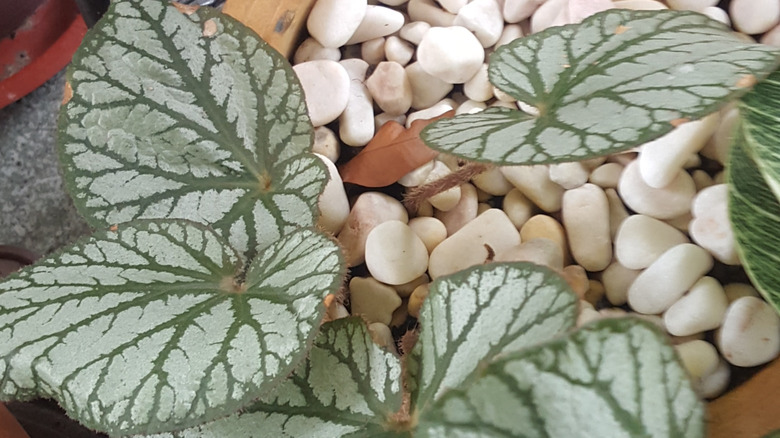
One of the few conditions begonias are particular about is humidity. While the exact requirements vary by species and cultivar, most begonias enjoy high humidity. Rex begonias, for example, require at least 75% humidity. On the other hand, begonias dislike having wet leaves, which makes misting an ineffective solution for indoor gardeners. Pebble trays, however, provide the humid environment a begonia needs while keeping the foliage dry.
Bromeliads
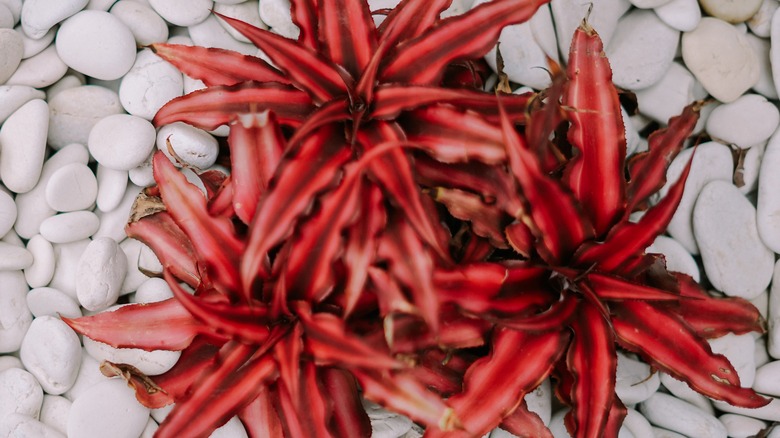
Most bromeliads need at least 40% humidity, which is considered high for typical household levels. In nature, bromeliads collect water in a central hollow where the leaves emerge from the stem. Indoors, reduced airflow can cause their leaves to curl or grow slowly. Pebble trays create the necessary humidity that bromeliads can’t achieve on their own. In fact, water is the most important factor when caring for bromeliads. Pairing high humidity with a dedicated watering schedule tailored to the species or cultivar you grow is essential.
Calatheas
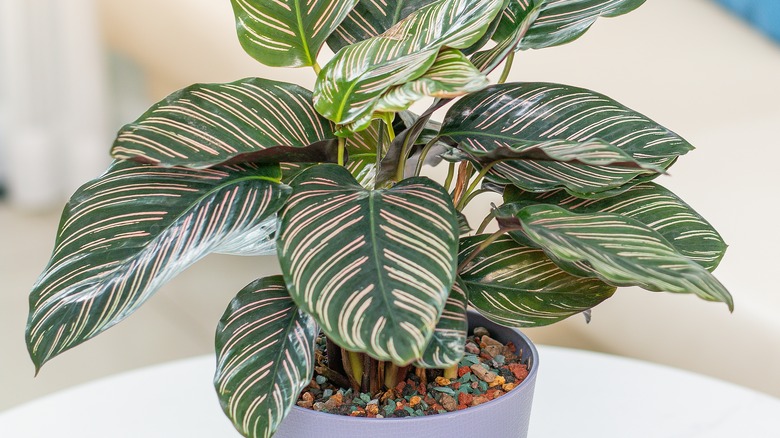
Calatheas are famous for their stunning foliage, but they also have specific care requirements. If humidity drops below their preferred levels, they will visibly protest—leaf edges may brown or curl, growth slows, or pests become more common. Most issues with calatheas stem from low humidity. A pebble tray filled with water under the plant's pot helps maintain optimal humidity levels, eliminating the need for a humidifier running all day.
Chinese Evergreen
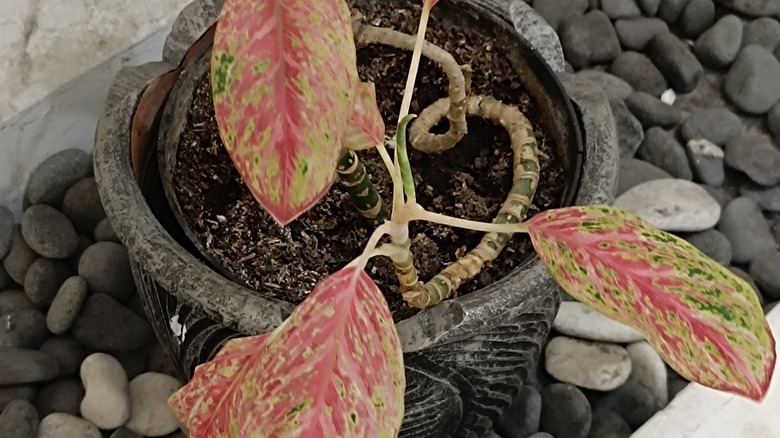
Chinese evergreens (Aglaonema spp.) are considered easier to care for than many other humidity-loving indoor plants. However, they still require relatively high humidity, especially the variegated varieties. Between 60% and 70% humidity will keep most Chinese evergreens healthy and vibrant. If humidity is too low, leaf edges may thin or dry out. A pebble tray is a good choice for these attractive houseplants because it provides a slight boost to existing humidity levels.
Dracaenas
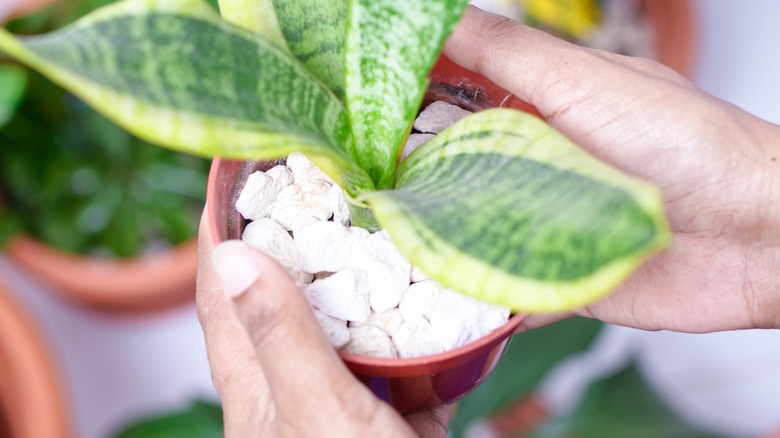
Dracaenas (Dracaena spp.) are adaptable plants, but they can show stress when indoor air is too dry or stagnant. Dry air often causes brown tips and slowed growth, especially during winter when heaters are running. A water-filled pebble tray can help boost humidity just enough to keep your dracaena healthy. Dracaenas also prefer bright, indirect sunlight, so choosing the right location in your home is crucial.
Ferns
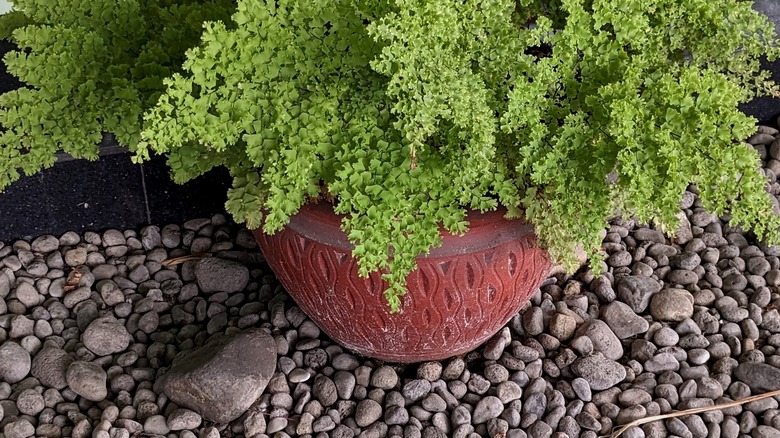
Whether grown in a shady backyard as ground cover or indoors in pots, ferns can be finicky. Most ferns have very specific light, temperature, and moisture requirements. If you've mastered the best watering methods but still face moisture issues, low humidity might be the problem. Several fern varieties can thrive indoors if humidity stays between 40% and 50%. As with other plants on this list, placing their pot on a pebble tray can give a drooping fern the moisture boost it needs.
Fiddle-Leaf Figs
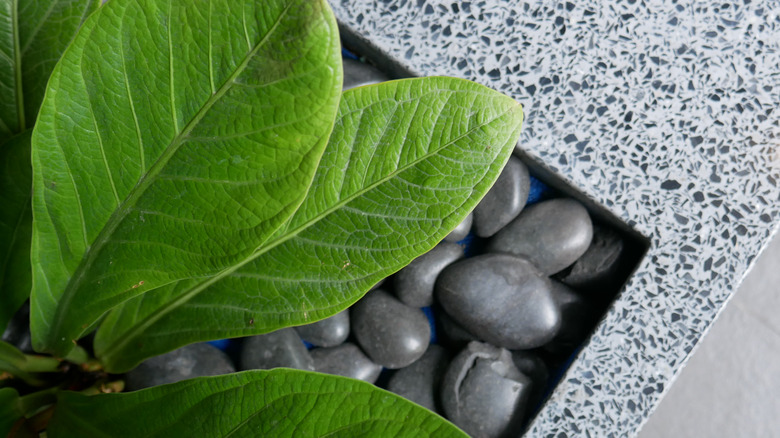
Fiddle-leaf figs (Ficus lyrata) prefer humid conditions, but they aren’t as picky as other indoor tropical plants. Quality lighting is more important to fiddle-leaf figs than humidity, but a lack of either can reduce leaf color and vitality. These plants generally do well in moderate humidity as long as they are kept away from direct heat sources that blow dry air. That being said, they do prefer slightly higher humidity than a standard home. A pebble tray works well to increase the humidity at the base of the plant.
Monsteras
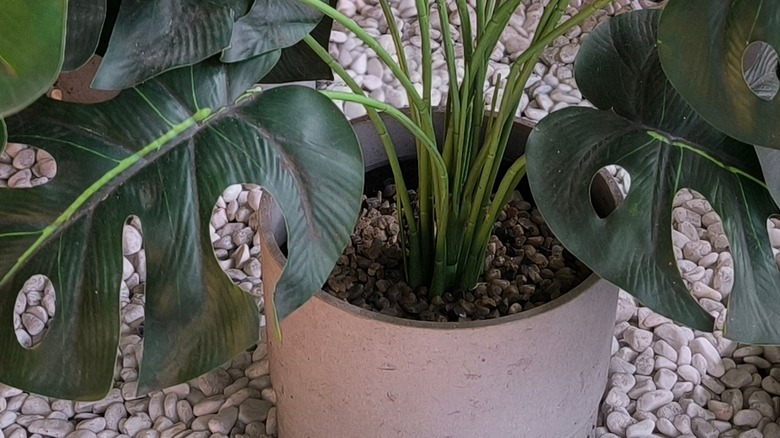
The popular houseplants in the genus Monstera thrive in tropical climates—conditions that can be difficult to mimic indoors. While lighting can be challenging to get right, rainforest humidity levels are one of the hardest factors to replicate. Monsteras need humidity levels of about 60% to grow healthy and strong. Some people mist the leaves to temporarily boost humidity, but a pebble tray offers a more consistent and effective solution.
Orchids
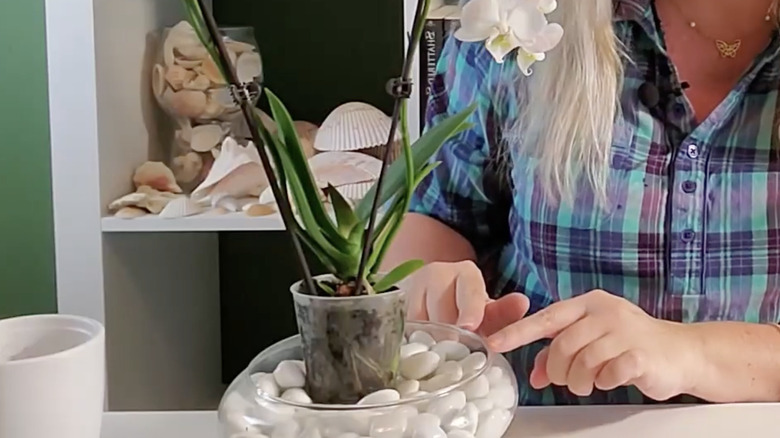
Among the many types of orchids you can grow indoors, there are plenty that love humidity—even if they despise having their roots in wet soil. A pebble tray is a solution that offers the best of both worlds: it elevates humidity without the risk of root rot. Almost all orchid species and cultivars need humidity levels between 40% and 70%. If you're growing a variety that requires higher humidity (closer to 70%), a pebble tray may not be enough—but it can definitely help as part of a broader care strategy.
Peace Lilies
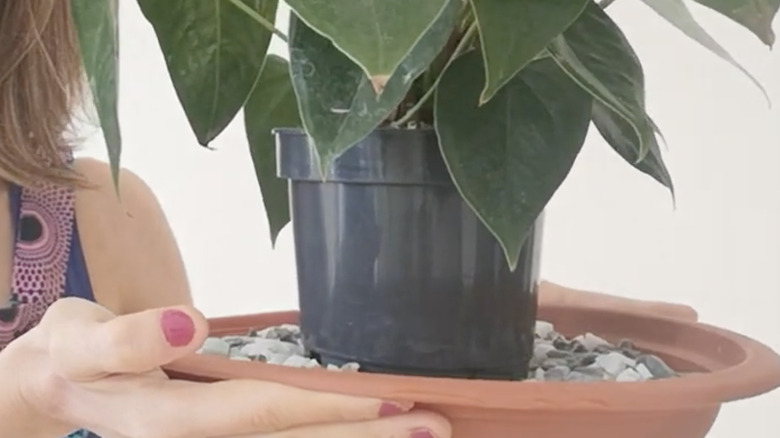
Another popular houseplant that loves humidity is peace lilies (Spathiphyllum spp.). They tend to produce more blooms when air moisture levels stay consistently high. You can tell if your humidity levels are too low by observing dropping leaves or foliage with brown, crispy edges. Fortunately, peace lilies bounce back quickly from unfavorable conditions. If your plant looks lackluster, place it on a pebble tray and add some water for an almost instant recovery. With the right conditions, it should look lively again within hours.
Peperomias
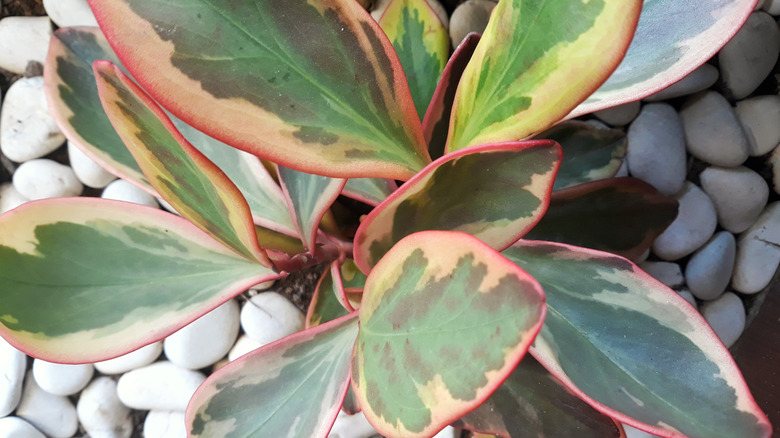
While most of the plants on this list are considered somewhat difficult to care for due to their specific requirements, peperomias (Peperomia spp.) are often praised as low-maintenance houseplants. However, like orchids, these plants with interesting foliage enjoy humidity but hate boggy soil. A pebble tray is the ideal solution for increasing humidity without affecting soil moisture. Peperomias thrive with moderately humid air, with humidity levels ideally between 40% and 60%.
Philodendrons
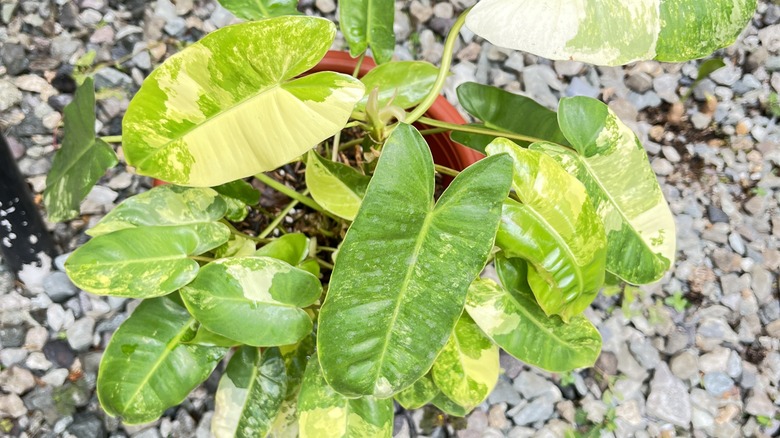
Philodendrons are an interesting houseplant when it comes to humidity. They are widely considered easy to care for because they can adapt to lower humidity levels indoors. However, they actually prefer high humidity, so a pebble tray is always a good idea if you're growing these sculptural houseplants. It can reduce stress on the plant, encourage healthy growth, and prevent pests and diseases.
Prayer Plants
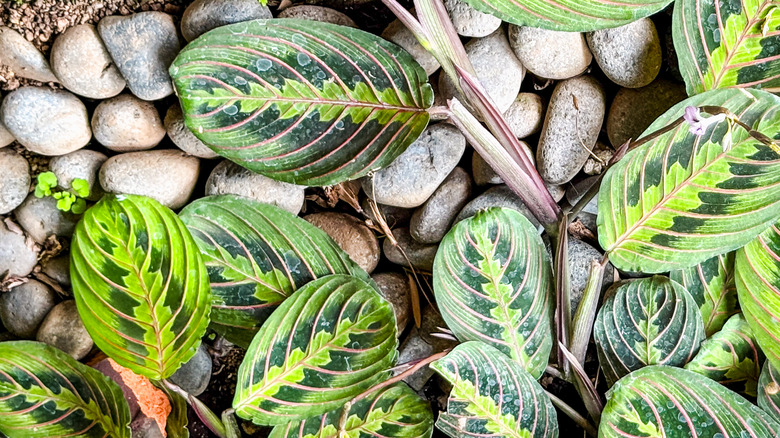
The prayer plant (Maranta leuconeura) looks similar to calatheas, which are also sometimes called prayer plants. Their leaves may appear otherworldly, but they're called prayer plants because of their growth habit. The leaves follow the sun throughout the day and fold in on themselves at night, resembling hands raised in prayer. These plants love humidity, so placing their pot on a pebble tray is a good idea. Generally, humidity levels between 40% and 60% are ideal.
Venus Flytrap
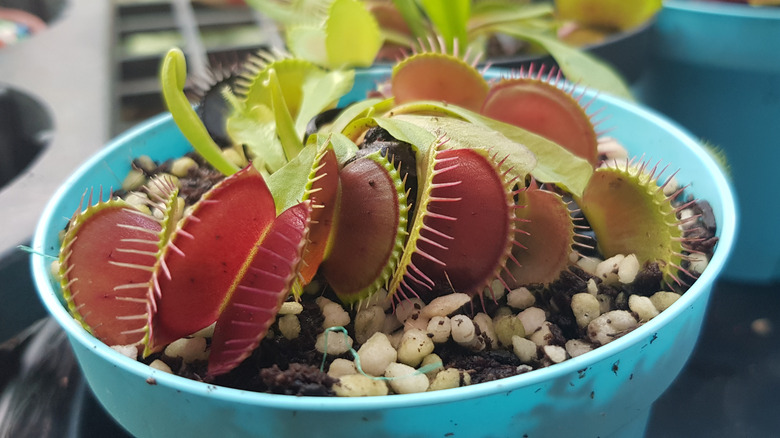
Carnivorous plants like the Venus flytrap (Dionaea muscipula) grow particularly well on pebble trays because, in the wild, they grow in humid, bog-like environments. However, Venus flytraps are sensitive. Before starting to grow them, it's important to understand their temperature and humidity needs. They require regular moisture in both the soil and the air. However, stagnant water can cause root rot. Pebble trays keep their roots out of water. That being said, they need consistent humidity. Try pairing the tray with a bell jar if your plant starts to struggle.