Why Sharp Knives Matter in the Kitchen
Sharp knives are essential for safe and efficient food preparation. While it may seem counterintuitive, a sharper knife is actually safer to use than a dull one. A dull knife requires more force and can slip or slide off the surface, increasing the risk of injury. According to Johnny Lee, a chef and partner at Rasarumah, “If your knife can't easily cut through whatever you are trying to cut, you are more prone to sliding or slipping off the surface and causing injury to yourself.”
In addition to safety, the sharpness of a knife affects how well it performs when cutting, slicing, or dicing. Chef Lee explains that “certain ingredients, like scallions or herbs, can be bruised and become mushy when you don't want them to because a dull knife ends up becoming more like a blunt tool. Also, for the sake of making your life easier and not wasting energy, you want to be able to cut your ingredients in as few motions as possible and not sawing back and forth wasting your time.” Ensuring your knives are properly sharpened helps maintain the quality of your food and makes cooking more enjoyable.
Sharpening vs Honing—What’s the Difference?
Honing and sharpening are two different processes that serve distinct purposes. Honing is more of a maintenance act where you realign the micro edges of the blade. It does not sharpen a dull edge but can extend the time between needing a sharpening procedure. Chef Lee notes that “honing is more of a maintenance act where you are realigning the micro edges. Imagine you are criss-crossing your fingers of your hands and honing will realign those tips to form a triangle again. Honing can't sharpen a dull edge, but can extend the time between needing a sharpening procedure.”
Sharpening, on the other hand, removes metal to restore the edge. If a knife cannot easily pass through the slick skin of a tomato, it’s time to sharpen the blade. “Imagine you are forming a triangle with your fingertips of both hands and over time that triangle becomes more of a microscopic trapezoid. Sharpening a knife using a whetstone or a grinder will remove metal to restore the edge,” says Chef Lee.
How to Know Whether Your Knife Needs To Be Honed or Sharpened
Regularly checking the blades of your kitchen knives helps determine when they need to be honed or sharpened. If the blade's still sharp but needs to be realigned, a few passes on a honing rod will straighten those microscopic bends and restore the cutting ability. Sharpening removes a small amount of steel to create a brand-new cutting edge. This is what you do when a blade truly can't cut anymore, according to Costantino Delnero, CEO and Chief Blade Officer of Seido Knives.
Tools You Can Use to Sharpen Kitchen Knives
Whetstones (Water Stones)
Whetstones come in various grits, from coarse to fine. A medium-grit stone is recommended for beginners, while intermediate users may progress to finer grits for a more polished edge. Coarse stones are ideal for very dull or damaged blades, while fine stones are used for honing and maintenance.
Pull-Through Sharpeners
Pull-through sharpeners are quick and easy to use but produce a poorer edge quality. They are intuitive, requiring simply drawing the blade through preset slots a few times. However, they offer less control over the angle and may remove more steel than necessary.
Honing Steels
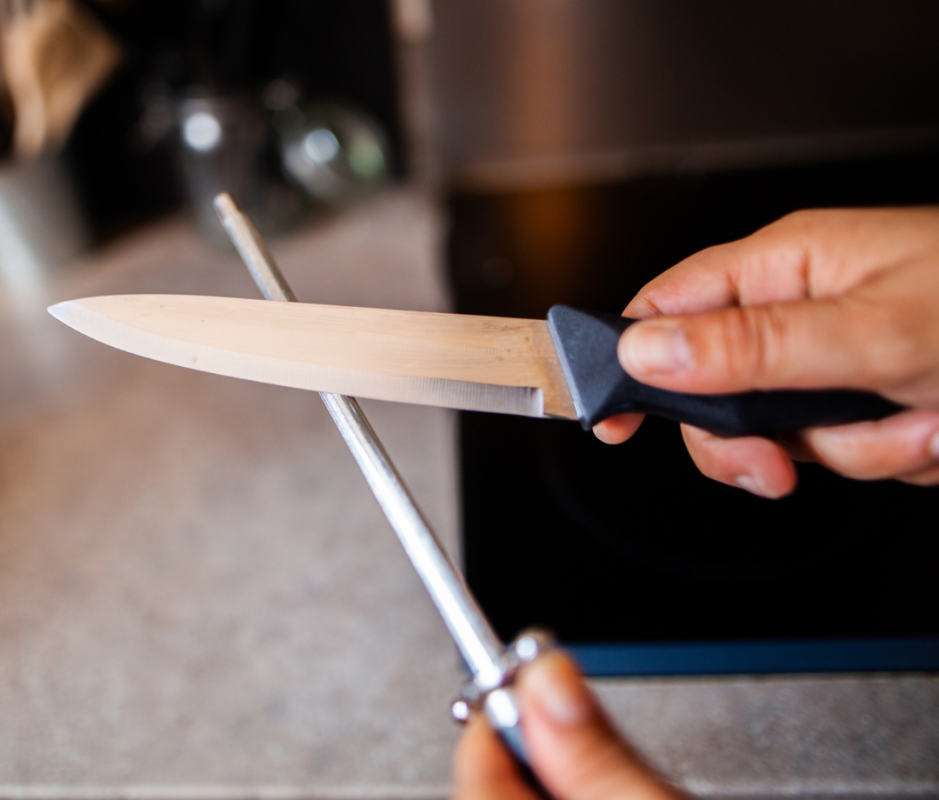
Honing rods or honing steels help realign the microscopic edge of a knife. Chef Lee suggests using a honing rod to maintain the edge, ideally before and after using your knife.
Other Tools
Automatic knife sharpeners can do an OK job, though they may not be as effective as manual methods. Belt grinders and leather strops are also useful for shaping and polishing blades. Ceramic honing rods can be used in place of steel rods for a gentler finish.
How to Sharpen a Kitchen Knife with a Whetstone
Choosing the Right Grit (Coarse vs Medium vs Fine)
Before starting, inspect your knife and choose a whetstone with the right grit. Coarse grits are for very dull blades, medium for slightly dull ones, and fine for final touches.
Soaking or Prepping the Stone (If Required)
Some whetstones require soaking, while others are 'splash and go.' Test by placing water on the stone. If it darkens, soak it; if it beads, no soaking is needed.
Finding the Correct Angle
The ideal sharpening angle for most blades is between 15 to 20°. Use a knife sharpening angle guide to maintain consistency.
Sharpening Technique: Strokes, Pressure, Consistency
Start with the coarse side, making smooth heel-to-tip strokes until a burr forms. Apply firm pressure during initial sharpening and less during deburring. Maintain consistent pressure and avoid wrist movements.
Flipping the Blade and Maintaining Even Sharpening
Sharpen both sides of the blade, flipping and repeating until a burr is raised on each side. Maintain even pressure throughout.
Polishing and Finishing the Edge
Switch to the fine side and repeat the process to polish the edge and remove the burr. Rinse and dry the knife and stone.
Alternative Sharpening Methods (and When to Use Them)
Using a Pull-Through Sharpener Correctly
Place the blade in the sharpener and pull it through with light downward pressure. Rolling sharpeners adjust to the blade and are gentler than standard pull-throughs.
Using a Honing Steel the Right Way
Stabilize the rod and run the knife blade down it at a consistent 15 to 20° angle. Slide the entire length of the blade down the rod in a sweeping motion.
"Quick Fix” Methods to Sharpen Knives Without a Sharpener
Field sharpeners, sandpaper, car windows, ceramic plates, or unglazed mugs can be used as quick fixes. However, results may not match those of proper sharpening tools.
Common Mistakes Beginners Make (and How to Avoid Them)
Using the wrong or inconsistent angles can create an uneven edge. Lock your wrists and use your whole arm for movement. Applying too much pressure can damage the blade or wear down the sharpening stone. Sharpening dirty or damaged knives can cause further damage. Over-sharpening can weaken the blade and shorten its life.
How Often Should You Sharpen Your Kitchen Knives?
The frequency depends on usage and the type of food being prepared. Tougher foods wear down knives faster. Chef Lee recommends checking the knife's edge every time it is used and honing it with a rod. For heavy-duty use, sharpening once a month is typical.
What Are the Signs Your Knife Is Due for Sharpening?
Signs include slipping off food, requiring excessive pressure to cut, and tearing or bruising ingredients. The tomato test is a reliable method: a sharp knife will bite through the skin immediately with zero pressure.
Is Professional Knife Sharpening Worth It?
For those who lack the skill or patience, professional sharpening is an option. Check local farmers markets for sharpening services. Damaged knives should be taken to professionals to avoid further damage.
Knife Care Tips to Keep Blades Sharper Longer
Use proper cutting boards such as wood or quality plastic. Avoid glass, granite, and ceramic surfaces. Wash and store knives properly, avoiding dishwashers. Keep knives in a knife guard to prevent damage from movement in drawers. Handle knives carefully to avoid microscopic bends that reduce cutting potential.